Androgenetic Alopecia vs Telogen Effluvium: Key Differences
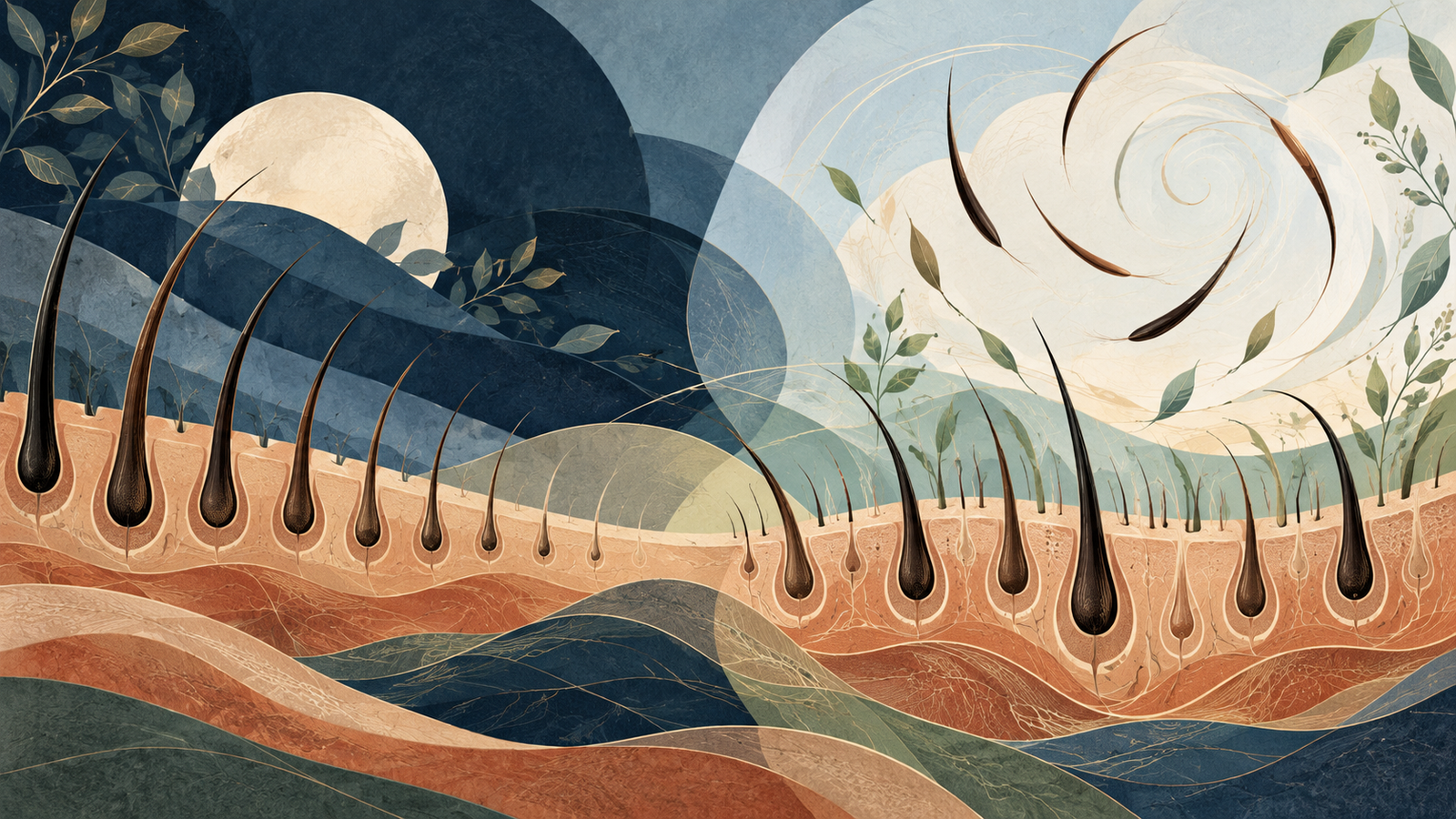
Androgenetic alopecia vs telogen effluvium is the difference between a progressive pattern of hair thinning and a disruption of the hair cycle that causes increased shedding. Both conditions can reduce density and make the scalp more visible, but they do not begin or develop in the same way.
One person may notice the temples slowly receding over several years. Another may suddenly find more hair in the shower a few months after an illness, operation or stressful event. Some people may experience both processes at the same time.
The visible result is hair loss. The underlying mechanism, however, determines what should happen next.
Androgenetic Alopecia vs Telogen Effluvium: How They Differ
The timing, distribution and history of the change provide important clues. These clues cannot replace a professional diagnosis, but they help explain why similar-looking cases may need different approaches.
Androgenetic alopecia develops progressively
Androgenetic alopecia is commonly known as male or female pattern hair loss. Genetically susceptible follicles gradually produce finer and shorter hairs. This process is called miniaturisation.
In men, the change often becomes visible around the temples, frontal hairline or crown. In women, it may appear as a widening part or reduced density over the top of the scalp. The progression is usually gradual rather than sudden.
A person may not notice unusually heavy shedding. Instead, the hair provides less coverage, looks thinner under bright light or no longer holds the same volume when styled.
Telogen effluvium causes increased shedding
Telogen effluvium occurs when more follicles than usual enter the resting and shedding phase of the hair cycle. The change may follow an illness, high fever, childbirth, surgery, substantial weight loss, medication change or a period of significant stress.
The shedding often becomes noticeable weeks or months after the triggering event. This delay can make the connection difficult to recognise.
Unlike a defined pattern around the temples or crown, telogen effluvium generally affects the scalp more widely. The follicles are not necessarily destroyed, and density may improve once the disturbance has resolved.
The British Association of Dermatologists explains that the condition often improves naturally, although recovery of the previous volume can take time.
Both conditions can occur together
Androgenetic alopecia vs telogen effluvium is not always an either-or question. A person with gradual pattern thinning can also develop sudden excessive shedding.
For example, someone may have noticed reduced density over several years and then experience a rapid change after an illness. The recent shedding may improve, while the underlying pattern loss remains.
This overlap is one reason why counting shed hairs cannot establish the cause. The earlier article on permanent or temporary hair loss explains the broader clues that can help describe how the change began.
Scalp symptoms require additional attention
Pain, burning, inflammation, persistent redness or smooth scar-like areas are not typical details to dismiss. These findings may indicate another condition affecting the scalp or follicles.
When such symptoms are present, a dermatologist’s assessment should come before cosmetic planning.
Why the Distinction Matters Before a Hair Transplant
A hair transplant redistributes suitable follicles from the donor region. It does not treat every cause of shedding and does not stop genetically susceptible natural hair from continuing to thin.
Telogen effluvium may require time and investigation
When increased shedding is the main problem, adding transplanted follicles does not address the reason the existing hairs are falling out. The priority is to consider the history, identify possible triggers and observe whether recovery begins.
Planning surgery while the density is still changing can lead to an inaccurate estimate of the area that genuinely requires transplantation.
Pattern hair loss requires a long-term plan
Transplantation may be considered for a suitable person with androgenetic alopecia, but the design must account for future thinning. The donor supply is limited, while the natural hair surrounding the transplanted area may continue to change.
The important questions are not limited to the current empty area. They also include the likely progression, the strength of the donor region and how the result may look years later.
What to discuss during an assessment
A useful consultation should cover when the loss started, whether it was sudden or gradual, which areas changed first and whether any event preceded the shedding. Old photographs can help demonstrate progression.
If you want to discuss these changes before making a treatment decision, you can reach the team through the contact page.
Understanding androgenetic alopecia vs telogen effluvium changes the order of the questions. Before asking which technique or how many grafts, we first need to understand which process is affecting the hair.