Dermatologist Before Hair Transplant: When Is It Necessary?
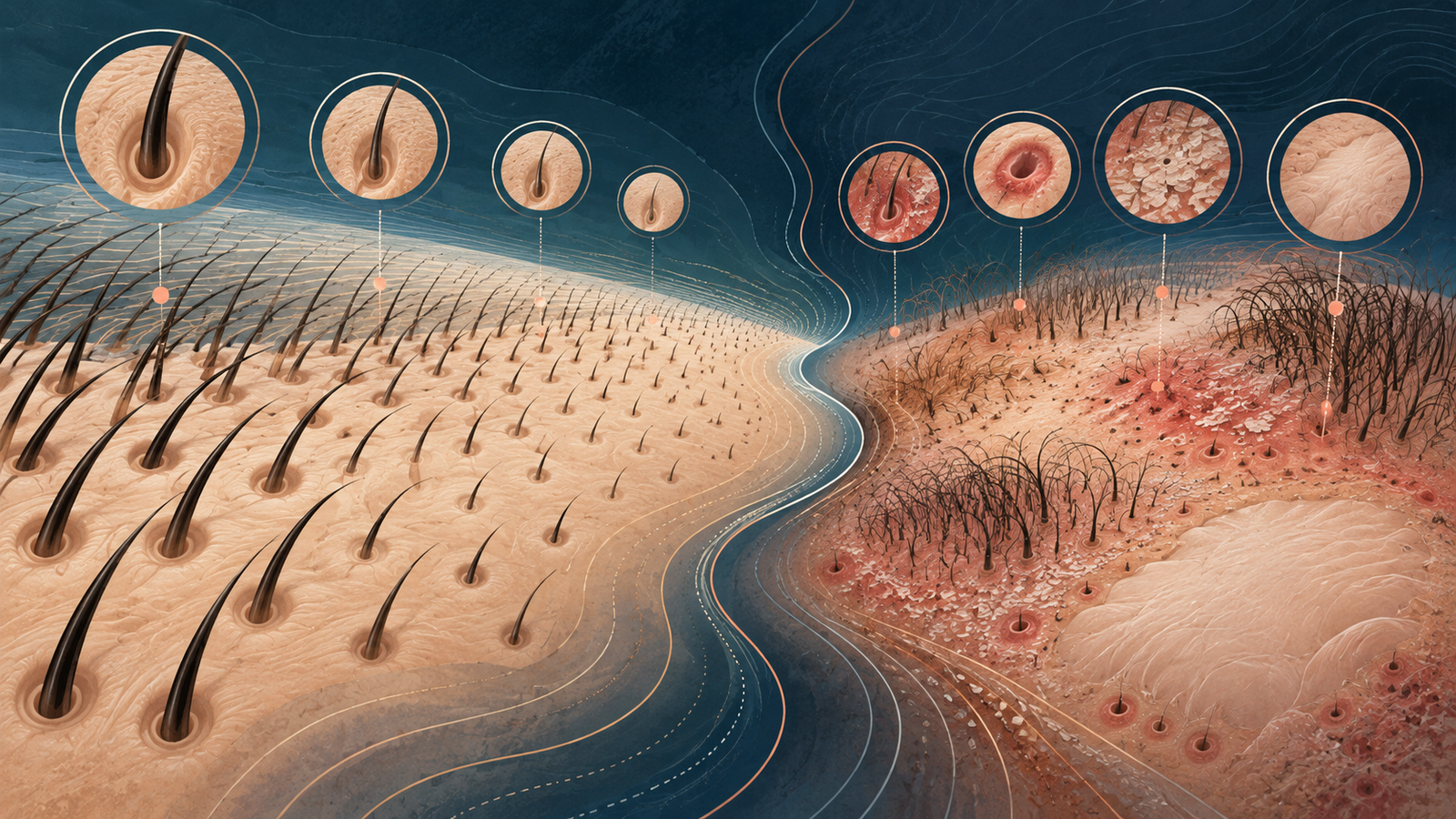
Dermatologist before hair transplant evaluation becomes important when the cause of hair loss is unclear, the shedding has changed suddenly or the scalp shows symptoms that do not fit a typical pattern. A hair transplant can redistribute healthy follicles, but it cannot diagnose or stop an active condition that is damaging them.
Not every patient needs a dermatological examination before surgery. However, knowing when to request one is an essential part of responsible planning. Sometimes the right decision is to proceed. Sometimes it is to wait until the scalp is stable. In certain cases, transplantation may not be the appropriate solution at all.
Dermatologist Before Hair Transplant: Signs That Need Attention
A slowly receding hairline or gradual thinning at the crown may be consistent with androgenetic alopecia. Even then, progression and donor stability should be assessed carefully. The situation requires more caution when the appearance or behaviour of the hair loss is unusual.
Sudden or rapidly increasing shedding should not be treated as a simple empty area waiting to be filled with grafts. The same applies to smooth round patches, irregular bald areas, pronounced redness, scaling, crusting or pustules. Itching, burning, pain and scalp tenderness are also relevant symptoms rather than minor details.
Other warning signs include hair loss affecting the eyebrows or eyelashes, shiny areas where follicular openings are difficult to see and thinning that extends into the potential donor region. These findings do not establish a diagnosis by themselves, but they show that the problem may fall outside a routine surgical assessment.
Scarring alopecias require particular care. In these conditions, inflammation may permanently damage follicles and replace them with scar tissue. Placing grafts while the disease is active does not stop that process. Existing and transplanted follicles may both remain at risk.
This is why hair loss assessment before a transplant must consider the condition of the scalp, not only the size of the thinning area.
What Can the Dermatological Examination Include?
A dermatologist before hair transplant consultation usually begins with the patient’s history. The physician may ask when the loss started, whether it was gradual or sudden and whether it followed an illness, childbirth, rapid weight loss, major stress or a medication change.
The scalp, hair and sometimes the nails or other areas of the body may also be examined. Magnified examination with a dermatoscope can reveal variations in hair-shaft diameter, broken hairs, inflammation and changes around follicular openings that may not be visible in an ordinary photograph.
According to the American Academy of Dermatology, assessment may also involve a gentle hair-pull test and, when medically indicated, blood tests or a scalp biopsy. This does not mean that every patient needs every test. Each investigation should answer a specific clinical question.
The purpose of referral is not to create an unnecessary delay. It is to understand whether the condition is temporary, treatable, active or stable enough for surgery to be considered.
Why Might a Hair Transplant Need to Wait?
Temporary shedding may improve once its trigger resolves or an underlying health problem is treated. Performing surgery too early could use a limited donor supply to correct an appearance that is still changing naturally.
Active inflammatory or scarring conditions present a different concern. A hair transplant cannot control the biological process attacking the follicles. Treatment and a documented period of stability may be necessary before surgical suitability can be reconsidered.
Unexplained donor thinning, rapidly progressing diffuse loss and patchy autoimmune conditions can also change the decision. In some cases, transplantation may become possible after diagnosis and management. In others, the long-term risk may remain too high.
The real question is not whether grafts can technically be placed. It is whether the scalp offers a stable environment in which they have a reasonable chance of producing a lasting result.
A dermatologist before hair transplant referral therefore represents a boundary of professional responsibility. Recognising that medical evaluation should come first is part of good transplant planning, not a step outside it. Once the cause and stability of the loss are clearer, a structured consultation can focus on what is realistically and safely achievable.