Hair Transplant Candidate: What Makes Someone Suitable?
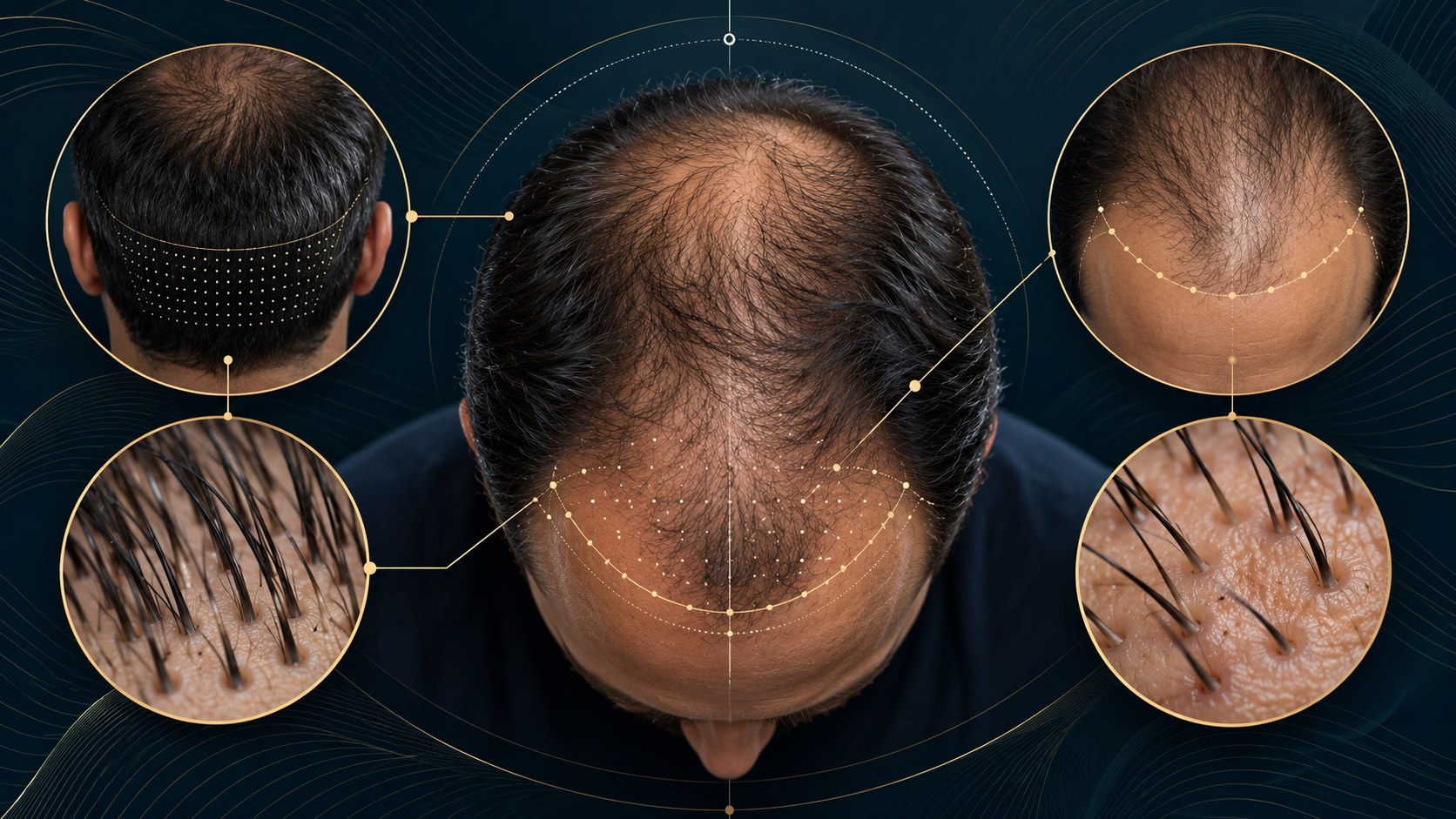
Hair transplant candidate assessment is not based only on the size of the thinning area. Having visible hair loss and wanting surgery do not automatically mean that transplantation is the right option. The cause and progression of the loss, the quality of the donor area and the patient’s expectations all influence the decision.
I begin by asking a practical question: can the available donor follicles create a meaningful improvement without compromising the future? A responsible answer requires more than photographs or an estimated graft number.
Hair Transplant Candidate: Four Questions That Matter
The first question concerns diagnosis. Hair transplantation is most commonly considered for established pattern hair loss, but different conditions can produce similar-looking thinning. Sudden shedding, inflammation, scarring or patchy loss may require medical evaluation before surgery is discussed.
The scientific review Deciding Surgical Candidacy in Pattern Hair Loss describes sufficient hair loss, a suitable donor area, a healthy scalp, good general health and reasonable expectations among the main elements of candidacy.
The second question is whether the loss is sufficiently stable. Surgery can place resistant follicles into a thinning area, but it does not stop the surrounding natural hair from changing. Rapid progression makes it difficult to determine where grafts should be placed and how much donor capacity should be preserved.
Age also matters, although it should never be used alone. The uncertainties affecting a younger hair transplant candidate relate mainly to the future pattern rather than the number written on an identity document.
The third question concerns the donor area. Density, hair-shaft thickness, miniaturisation and the dimensions of the safe donor zone all influence how much coverage can be achieved. A large recipient area combined with limited donor capacity may require more modest priorities.
The fourth question is whether expectations match biological limits. A transplant redistributes existing follicles. It cannot create an unlimited supply of hair or reproduce the original density across every area of an extensively bald scalp.
When a Possible Operation Is Still a Poor Plan
Some procedures are technically possible but strategically unwise. Grafts may be extracted and implanted successfully while the overall plan remains unsuitable for the person’s likely future loss.
Diffuse thinning that extends into the donor region is one example. If follicles expected to provide permanent coverage are also becoming weaker, their long-term reliability may be uncertain.
Active scalp inflammation, unexplained shedding and signs of scarring are other reasons to pause. When symptoms fall outside an ordinary pattern, a dermatological assessment before transplantation can clarify whether treatment or further investigation should come first.
General health must also be considered. Medical conditions and medications that may affect surgery or healing should be reviewed by an appropriately qualified physician. The purpose is not to exclude people unnecessarily, but to prevent an elective procedure from moving ahead without a safe foundation.
Expectations can also make an otherwise suitable person a poor candidate. Someone expecting guaranteed density, an extremely low hairline or a permanent end to all future hair loss may need a more realistic understanding before making a decision.
A Good Candidate Needs a Long-Term Plan
A suitable hair transplant candidate has more than a strong donor area. The diagnosis is understood, the priorities are clear and the proposed design respects both present needs and possible future loss.
This may mean concentrating grafts in the frontal region rather than spreading them thinly across the entire scalp. It may require a more mature hairline or leaving part of the donor reserve untouched. In some cases, it may mean postponing surgery and monitoring the pattern.
Candidacy is therefore not a permanent label. A person who is unsuitable today may become suitable after the condition stabilises. Another person may remain a poor candidate because the donor area cannot support the desired coverage.
The best candidate is not simply the person most eager to have surgery. It is the person for whom a careful procedure can provide a natural improvement without creating a larger problem for the future.