Hair Transplant with Diffuse Thinning: Who Is Suitable?
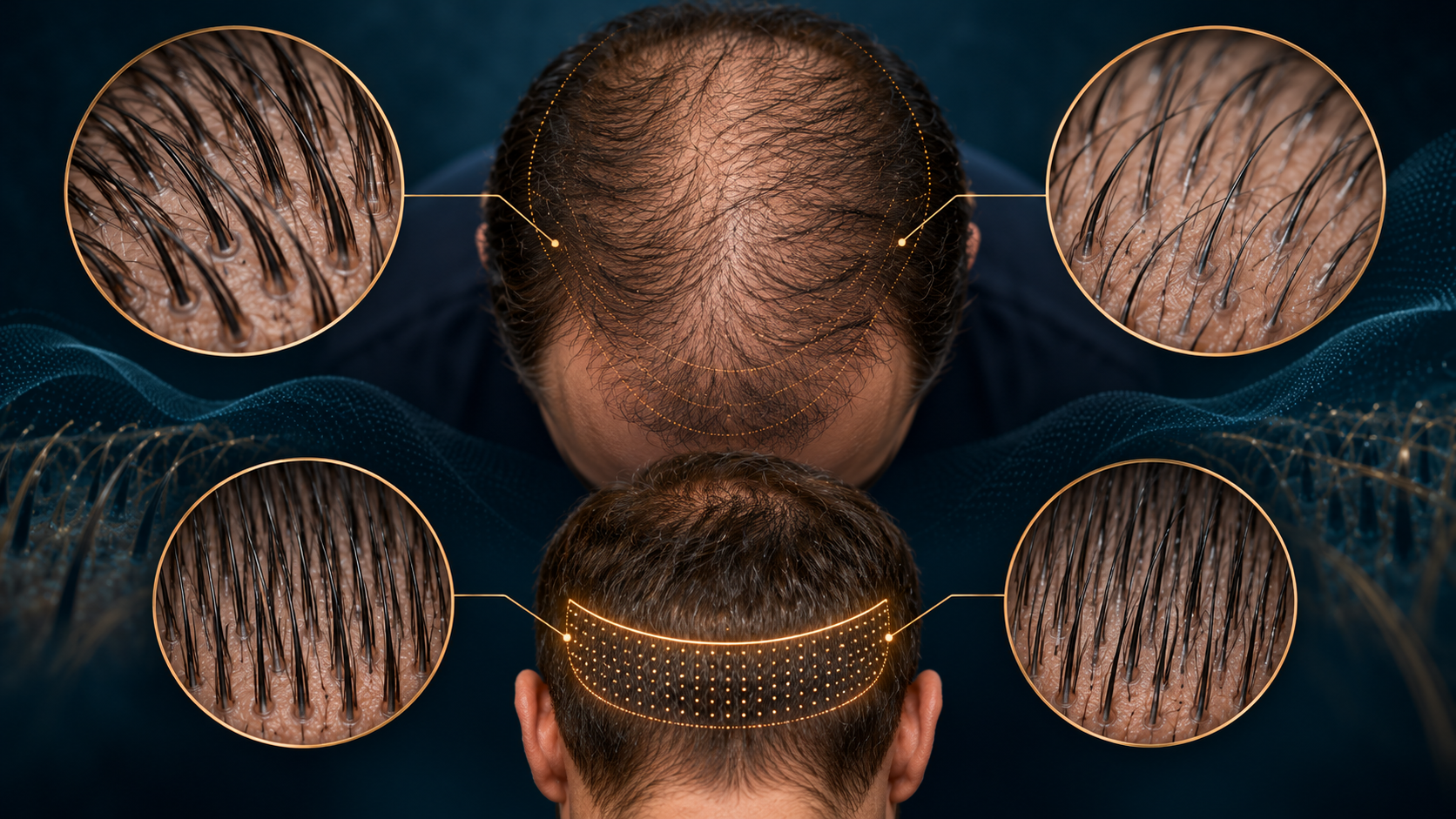
Hair transplant with diffuse thinning may be possible, but the word “diffuse” does not describe a single condition. In some people, thinning mainly affects the top of the scalp while the donor area remains stable. In others, reduced density and miniaturisation also involve the back and sides of the head. These two situations require very different decisions.
The important question is not simply how thin the hair looks. We need to understand why it is thinning, whether the process is stable and where the grafts would come from.
Hair Transplant with Diffuse Thinning Begins with the Pattern
Diffuse thinning can occur in male or female pattern hair loss, but it can also be associated with temporary shedding, inflammatory conditions or other medical causes. That is why a clear diagnosis must come before surgical planning.
When the thinning is concentrated in the recipient area and the donor hair remains strong, transplantation may be considered. Even then, placing grafts between existing hairs requires careful planning. The aim is to improve visual density without damaging the native hair or using more grafts than the donor reserve can safely provide.
The evaluation is therefore similar to determining whether someone is a good candidate for a hair transplant: diagnosis, progression, donor quality and realistic expectations must be considered together.
Hair calibre also affects the result. Fine hair usually creates less visual coverage than thick or wavy hair, even when the same number of grafts is used. A technically possible operation may therefore offer a more modest change than the patient expects.
The Donor Area Decides What Is Possible
The donor area is the decisive factor in a hair transplant with diffuse thinning. If follicles at the back and sides are also becoming thinner, they may not provide a stable long-term source of grafts. Removing hair from an already weakened area can make donor thinning more visible, while the transplanted follicles may not retain the durability expected from donor hair.
For this reason, the donor area should be examined for density, hair-shaft calibre and miniaturisation rather than judged from photographs alone. Hair transplant practice guidelines also emphasise the importance of assessing miniaturisation within the proposed safe donor zone.
A large recipient area creates another limitation. The available grafts may not be sufficient to reproduce the original density across the entire scalp. Priority may need to be given to the frontal area, while the crown is treated more conservatively or left for a later decision.
When Surgery May Need to Wait
A hair transplant with diffuse thinning may need to be postponed when shedding is active, the diagnosis is uncertain, the donor area shows significant miniaturisation or expectations exceed the available graft supply.
Waiting can provide time to document progression, complete the necessary medical assessment and determine whether the pattern is becoming more stable. The reasons for postponing a hair transplant should therefore be viewed as part of responsible planning rather than as a negative decision.
Diffuse thinning does not automatically rule out transplantation. It does, however, make careful diagnosis and donor assessment essential. The safest plan is the one that respects both the existing hair and the limited donor reserve.